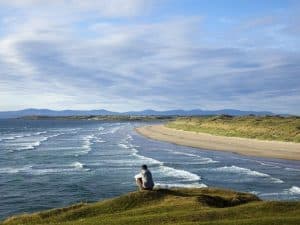
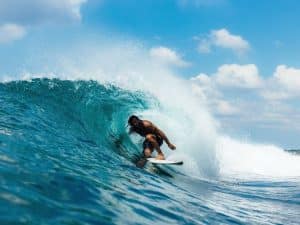
There’s a reason surfers endure the 6-8 hour journey across Sri Lanka’s interior to reach Arugam Bay—and it’s not subtle. Main Point delivers 300-500 meter rides that peel across three distinct sections, rivaling any warm-water point break on Earth. When I caught my first wave here extending from the outer reef through the crumbly mid-section all the way into the bay, clocking over a minute of continuous riding, I understood the hype. This remote east coast village operates on the opposite season from the famous south coast spots, firing May through October when southwest monsoon brings offshore winds and consistent southeast swells. While Main Point draws crowds chasing epic length, surrounding breaks like Pottuvil Point, Whiskey Point, and remote Okanda spread the lineup across 90 kilometers of coastline.
Worth Knowing
- ✓ Main Point delivers 300-500 meter rides—among the longest warm-water point breaks globally
- ✓ May-October season operates opposite south coast (Nov-Apr), making Sri Lanka year-round surf destination
- ✓ July-September peak season brings best wave shape but heavy crowds (40+ surfers at Main Point)
- ✓ Nine breaks within 90km offer progression from Baby Point beginner waves to Okanda’s 600m barrels
Quick Surf Guide to Arugam Bay
- Best season: July-September (peak consistency) or May-June/October (fewer crowds)
- Best for beginners: Baby Point, Whiskey Point
- Best for intermediates: Pottuvil Point, Peanut Farm, Panama Point
- Best for advanced: Main Point, Okanda, Lighthouse
- Main wave type: Right-hand point breaks
- Water temp: 27-29°C (80-84°F) year-round
- Wetsuit needed: None—just boardshorts/bikini + rash guard
- Budget level: $25-100/day
Why Surf in Arugam Bay?
World-Class 300-500 Meter Right-Hand Point Breaks
Main Point’s legendary length distinguishes Arugam Bay among global surf destinations. After surfing points worldwide, I can confirm quality swells here produce rides extending 300-500 meters across three distinct sections: fast outer wall requiring speed, crumbly mid-section around headland, mellow inside finishing in the bay. This exceptional ride length allows multiple maneuvers per wave, building skills progressively as sections change character. Few warm-water destinations worldwide offer comparable ride duration, positioning A-Bay alongside Indonesia’s best points for tropical wave quality.
Year-Round Surfing Option for Sri Lanka
Arugam Bay’s east coast location creates opposite seasonality from famous south coast spots like Weligama and Midigama. When I learned about this system, it transformed how I plan Sri Lankan trips. When southwest monsoon brings onshore winds and rain to Hikkaduwa (May-October), the same weather system generates offshore winds and clean swells at A-Bay. This complementary pattern makes surfing in Sri Lanka viable year-round by simply switching coasts, unique positioning rarely found in single-country destinations.
Variety for All Levels (Baby Point to Okanda)
Nine distinct breaks within 90-kilometer radius accommodate complete beginners through advanced barrel-hunters. Baby Point’s mellow inside section provides safe learning environment with 50-meter rides over sandy bottom. Intermediate surfers progress to Pottuvil Point’s long walls or Peanut Farm’s playful peaks. Advanced riders chase Okanda’s remote 400-600 meter barrels or Lighthouse’s hollow rights. This range eliminates need for destination-hopping, allowing skill progression within single base.
Remote East Coast Adventure
Unlike developed south coast infrastructure, A-Bay maintains frontier atmosphere with ramshackle cafés, sand-floor bars, and authentic fishing village character. After experiencing both coasts, I appreciate how the 6-8 hour journey from Colombo crossing the island’s interior filters casual tourists, creating dedicated surf community. Surrounding Yala and Kumana national parks provide wildlife encounters, while relative isolation preserves laid-back vibe absent from tourist-heavy Weligama or trendy Ahangama.
Best Surf Spots in Arugam Bay
The Main Breaks (Walking Distance)
Main Point – Best for Intermediate to Advanced
Wave type: Long right-hand point break with three sections
Best swell: Southeast, 4-6 ft (1.2-1.8 m), holds up to 8 ft
Best tide: Mid to high tide
Best wind: Morning offshore (until 11 AM-12 PM)
Best season: July-September (peak)
Skill level: Intermediate to advanced
Hazards: Extremely crowded (40+ surfers peak season)
Access: 200 meters from town center, easy walking
Main Point built A-Bay’s reputation as world-class destination. After countless sessions here, I’ve learned the three distinct sections each offer different experiences: fast outer wall, crumbly mid-section, mellow inside (Baby Point). Rides extending 300-500 meters on quality swells allow multiple maneuvers per wave. Works best 4-6 ft but holds up to 8 ft over mixed sand/reef bottom. The beautiful natural setting with palm trees and traditional fishing boats adds to the experience, but patience is required navigating heavy traffic during July-August.
Baby Point – Best for Beginners
Wave type: Mellow inside section of Main Point
Best swell: Same as Main Point but gentler
Best tide: Mid to high
Best season: May-October
Skill level: Complete beginners
Hazards: Minimal—sandy bottom
Crowds: Busy with 20-30 learners during peak season
Baby Point occupies Main Point’s inside section where wave loses power entering bay. I recommend this for first unbroken wave attempts—mellow 50-meter rides with gentle takeoffs, sandy bottom reducing wipeout consequences, and multiple surf schools operating daily create ideal learning environment. Forgiving nature allows building confidence safely before tackling Main Point proper.
North of Town (10-45 Minutes)
Pottuvil Point – Best for Intermediate to Advanced
Wave type: Long wally right-hander
Best swell: Similar to Main Point but slightly smaller, 200-400 meters
Best tide: Mid-tide
Best wind: More protected from afternoon winds
Best season: May-October
Skill level: Intermediate to advanced
Crowds: Significantly lighter (10-20 surfers vs Main Point’s 40+)
Access: 10 minutes north through Pottuvil town ($2-3 tuk-tuk)
Pottuvil Point delivers quality right-handers offering Main Point alternative with less crowd pressure. After escaping Main Point chaos here multiple times, I appreciate the steep faces suitable for advanced maneuvers and better wind protection lasting later into the day. Works on similar swells but typically 10-20 surfers versus Main Point’s overwhelming 40+.
Whiskey Point – Best for Beginners to Intermediate
Wave type: Soft, mellow right-hander
Best swell: Wide range, 100-200 meters
Best season: May-October (works year-round as backup)
Skill level: Beginner to intermediate (longboard-friendly)
Hazards: Minimal
Access: 15 minutes north ($3-5 tuk-tuk), Whiskey Point Resort beachfront
Whiskey Point produces gentle right-handers ideal for longboarding and building intermediate skills. Boulder point creates sand accumulation with forgiving sections. Popular with longboarders and SUP riders. Good year-round backup when other spots maxed out or for mellow rest-day sessions.
Lighthouse – Best for All Levels (Remote)
Wave type: Two right-handers (beginner-friendly and advanced boulder-bottom)
Best swell: Southeast, rides 100-200 meters when working
Best season: May-October
Skill level: All levels
Hazards: Remote location (wildlife encounters possible)
Crowds: Nearly empty (5-10 surfers maximum)
Access: 45-minute tuk-tuk journey ($15-20 round-trip), Hilltop Cabanas accommodation available
Lighthouse delivers uncrowded rights in stunning remote setting. After making the journey, I can confirm it rewards with space and beauty—golden sand beach, palm trees, no development. Nearly empty lineups make it perfect for all levels seeking uncrowded waves and willing to commit to the travel.
South of Town (20 Minutes to 1 Hour)
Peanut Farm – Best for Intermediate
Wave type: Fun peaks with rights 100-200 meters
Best swell: Wide range once sandbars form
Best season: May-October
Skill level: Intermediate
Hazards: Minimal
Crowds: Light (10-15 surfers maximum)
Access: 20 minutes south ($5-7 tuk-tuk), locally-run beach bar, camping available
Peanut Farm sits 20 minutes south offering fun peaks in relaxed setting away from Main Point chaos. Two distinct breaks spread crowds. I love the casual vibe here—volleyball net, beach bar, playful waves without intensity. Works on wide swell range and provides excellent intermediate practice without crowds.
Elephant Rock – Best for Intermediate
Wave type: Sandy-bottom right
Best swell: Larger swells
Best season: May-October
Skill level: Intermediate
Hazards: Less consistent than main breaks
Access: Walking distance from southern accommodations
Elephant Rock provides picturesque setting with named rock formation creating unique backdrop. Lacks power compared to Main Point but forgiving nature makes it good intermediate practice wave. Beautiful sunrise/sunset viewing location when you’re not in the water.
Panama Point – Best for Intermediate
Wave type: Long right-hand point, 200-300 meters
Best swell: Southeast, 3-5 ft (1-1.5 m)
Best season: May-October
Skill level: Intermediate
Hazards: Sandy and reef bottom mix
Crowds: Typically uncrowded (5-10 surfers)
Access: 30 minutes south, scenic route through temples and rice paddies
Panama Point offers accessible intermediate waves in beautiful surroundings. After surfing here, I appreciate the scenic journey as much as the waves—suitable for progressing intermediates building confidence on longer point break rides without intimidation factor.
Okanda – Best for Advanced (Epic Remote Mission)
Wave type: Extremely long right-hander, 400-600 meters
Best swell: Strong swells, 6-10 ft (1.8-3 m), capable of 60+ second rides
Best season: May-October
Skill level: Advanced only
Hazards: Steep barreling sections, half reef/half sand, remote location
Crowds: Virtually empty due to distance
Access: 1+ hour drive through Yala National Park ($40-60 tuk-tuk full-day), wildlife sightings common
Okanda represents A-Bay area’s most remote quality break. After making the mission, I can confirm it produces extraordinary ride length in wilderness setting—400-600 meter rides with steep, barreling sections rivaling Indonesia’s best. Requires advanced skills and commitment but rewards with world-class uncrowded perfection.
When to Surf in Arugam Bay: Best Seasons & Conditions
Peak Season (July-September)
July through September delivers peak conditions with fully-formed sandbars creating optimal wave shape and 300-500 meter rides at Main Point. After surfing multiple peak seasons, I’ve found morning offshore winds typically last until 11 AM-12 PM before afternoon sea breezes arrive. Wave sizes average 4-8 ft (1.2-2.4 m).
The tradeoff is very busy crowds—expect 40+ surfers at Main Point on quality days. I recommend dawn patrol (6-7 AM) for best crowd-to-wave ratios or exploring alternative breaks entirely.
Best for: Consistent long rides | Water temp: 27-29°C | Wetsuit: None needed | Crowds: Very heavy
Shoulder Season (May-June, October)
Shoulder months offer excellent value with good weather, offshore winds, and decent surf though expect smaller, less consistent swells averaging 2-5 ft (0.6-1.5 m). I recommend these months for better prices and moderate crowds (15-25 surfers) while maintaining quality conditions.
Best for: Value and fewer crowds | Water temp: 27-29°C | Wetsuit: None needed | Crowds: Moderate
Transition (April, Early November)
Variable winds with occasional good days as swells build or fade. Wave sizes range 2-4 ft (0.6-1.2 m) with low crowds (5-15 surfers). After experiencing these periods, I’d say they work for budget travelers willing to gamble on conditions or those combining surf with other activities.
Best for: Gamblers and budget travelers | Crowds: Low
Off-Season (November-March)
Avoid entirely. Onshore winds, heavy rain, inconsistent swells turn town into ghost village with most accommodations, restaurants, and surf shops closing. During these months, head to south coast spots like Midigama where opposite monsoon creates offshore conditions.
Verdict: Completely avoid—surf south coast instead
Practical Tips for Surfing in Arugam Bay
Surf Schools & Rentals
Arugam Bay’s main street hosts 15+ surf shops. After trying several, here are the top-rated:
Ocean Surf Arugam Bay: Run by Kiyas, ISA certified, coached 9,000+ students. Single lessons $20-30, 5-lesson packages $80-120.
Arugam Bay Agenda: ISA-qualified teachers, highly-rated beginner programs. 1.5 hour lessons $20-25.
Board rentals: Daily $5-10 depending on quality, weekly $30-50 (negotiate 10+ day discounts). Inspect carefully as quality varies. Reef booties available $15-25 (essential for reef breaks).
For choosing the right board size, consult a surfboard size chart or use a surfboard volume calculator.
Essential Surf Gear for Arugam Bay
☐ Reef booties 5mm (for reef breaks)
☐ Reef-safe sunscreen SPF 50+
☐ Surf wax (tropical temperature)
☐ Spare leashes (tropical sun degrades quickly)
☐ Basic ding repair kit
☐ Surf watch for session tracking (recommended models)
☐ Boardshorts/bikinis (multiple pairs)
☐ Zinc oxide for face
☐ Water bottle (hydration crucial in tropical heat)
Getting to & Around Arugam Bay
From Colombo Airport (320km, 6-8 hours):
Private taxi: Most convenient at $100-150. Book through accommodation in advance. Driver navigates route, stops for meals, wildlife sightings (elephants common). Split costs with other travelers.
Stopover strategy: After making this journey multiple times, I recommend breaking it with overnight in Ella (mountain town), Yala (safari), or cultural triangle to reduce single-day travel fatigue.
Local tuk-tuks: Negotiate before departure. Within town: $1-2. To Pottuvil Point: $2-3. To Whiskey Point: $3-5. To Lighthouse: $15-20 round-trip. To Okanda: $40-60 full-day hire.
Surf Safety in Arugam Bay
After years navigating these breaks:
Main Point crowds: Peak season brings extreme crowding (40+ surfers) creating collision risks. Expect drop-ins, snaking, paddling battles. I’ve learned to arrive at dawn (6-7 AM) for best crowd-to-wave ratio or explore alternative breaks entirely.
Lineup etiquette issues: Mixed ability levels sharing lineup creates challenges. Beginners often paddle into impact zone unaware of priority rules. Communicate clearly, maintain position assertively but respectfully, choose outside peaks when possible.
Sun protection: Equatorial sun intensity exceeds most travelers’ home climates dramatically. After learning this the hard way, I always apply SPF 50+ reef-safe sunscreen liberally, wear long-sleeve rash guards, use zinc oxide on face, and hydrate constantly. Track surf time with surf watches.
Where to Stay in Arugam Bay
Stay in Town (Main Street Area)
Budget ($10-25/night): Basic guesthouses and hostels along main road. Fan rooms, shared bathrooms. Adequate for surf-focused trips.
Mid-range ($40-80/night): Surf Gangs ($40-50) offers giant balcony rooms, pool, working AC, 30 seconds from beach. Oasis Bay ($25-30) provides friendly staff and excellent free breakfast.
Pros: Walking distance to Main Point, restaurant variety, nightlife access, social atmosphere.
Stay at the Breaks
Whiskey Point Resort: Beachfront location meters from break, $60-100/night, closed off-season, book early for peak months.
Hilltop Cabanas (Lighthouse): Remote beach huts, $30-50/night, stunning restaurant, virtually private surf access, 45 minutes from town.
Strategy I recommend: Split trip between town base (2-3 days exploring Main Point, nightlife, restaurants) and remote break stay (2-3 days Lighthouse or Whiskey uncrowded sessions).
How to Choose Accommodation
☐ Book 2-3 months ahead for peak July-September
☐ Verify AC quality (worth it in tropical heat)
☐ Check board storage and wetsuit drying areas
☐ Confirm WiFi if working remotely
☐ Ask about generator backup (power cuts common)
☐ Consider proximity to Main Point vs tuk-tuk costs
Arugam Bay Village Life
Backpacker Vibe and Nightlife
A-Bay maintains quintessential surf town backpacker atmosphere distinct from south coast’s broader tourist appeal. After experiencing both, I appreciate the main street’s sand-floor bars, ramshackle cafés, surf shops, and budget accommodations creating social hub. Nightlife centers around beach bars with live music, fire shows, and international crowd mingling. Less developed than Weligama but more vibrant social scene than quiet Midigama.
Daily Surf Life Routine
My typical A-Bay routine: Dawn patrol starts 6-7 AM catching morning offshores before winds shift. Post-surf breakfast 9-10 AM at beachfront cafés reviewing sessions. Midday heat drives people to shade, pools, naps. Afternoon winds (11 AM-2 PM onward) reduce surf quality though some paddle out for wave count. Evenings bring sunset sessions if winds calm, followed by dinner and socializing at beach bars.
Beyond Surfing: Things to Do
Yala National Park Safari
Yala National Park sits 1 hour south, offering Sri Lanka’s highest leopard density plus elephants, sloth bears, crocodiles, and 200+ bird species. Half-day safaris cost $40-80 per person. Early morning departures (5-6 AM) provide best wildlife viewing—I spotted three leopards on my last visit.
Kumana Bird Sanctuary
Kumana protects important wetland habitat attracting migratory birds May-September (coinciding with surf season). Less crowded than Yala, offering peaceful birdwatching. Located north of A-Bay, accessible via tuk-tuk.
Kudumbigala Monastery
Ancient Buddhist monastery perched on rocky outcrop provides panoramic views. Requires 20-minute climb but rewards with stunning vistas across jungle and ocean. Free entry, modest dress required. Good half-day activity when surf flat.
Arugam Bay vs South Coast: Which Should You Choose?
After surfing both coasts extensively:
Choose Arugam Bay For:
- World-class long point breaks (300-500 meter rides)
- May-October surf season avoiding European winter crowds
- Right-hand waves (goofy-footers paradise)
- Backpacker atmosphere, frontier vibe, adventure focus
- Remote location with national parks, wildlife safaris nearby
- Warm water without wetsuit requirement
Choose South Coast (Weligama, Midigama) For:
- November-April season during European winter
- Higher break density within short distances
- Better beginner infrastructure (Weligama’s massive beach break)
- Mix of reef and beach breaks, lefts and rights
- Easier access from Colombo (2-4 hours vs 6-8 hours)
- More developed tourism infrastructure, luxury options
- Cultural sites like Galle Fort nearby
Frequently Asked Questions
When is the best time to surf Arugam Bay?
July-September delivers peak conditions with fully-formed sandbars, consistent swells, and best wave shape for 300-500 meter rides. After timing multiple trips, I recommend May-June and October shoulder months for better value with decent surf though expect smaller, less consistent swells. Avoid November-March off-season entirely.
Is Arugam Bay good for beginners?
Yes, Baby Point provides excellent beginner environment with mellow 50-meter rides, sandy bottom, and numerous surf schools. Whiskey Point offers progression option. However, Main Point’s crowds and power exceed beginner capabilities. Weligama on south coast offers superior beginner infrastructure overall.
How crowded is Main Point?
Very crowded during peak July-August with 40+ surfers common on quality days. After dealing with these crowds for years, I’ve learned shoulder months see 15-25 surfers. Dawn patrol (6-7 AM) provides best crowd-to-wave ratios. Alternative breaks like Pottuvil Point, Peanut Farm, and Lighthouse offer crowd relief.
How do I get to Arugam Bay from Colombo?
Private taxi most convenient at $100-150 taking 6-8 hours crossing island. Book through accommodation in advance. Budget bus/train options exist under $10 but challenging with boards, requiring 10+ hours and multiple transfers. I recommend taxi or breaking the journey with overnight stop in Ella.
Can you surf Arugam Bay year-round?
No. Season runs April-October with peak July-September. November-March off-season brings onshore winds, rain, flat conditions. Town becomes ghost village with most businesses closed. During these months, I head to south coast spots like Midigama or Weligama where opposite monsoon creates offshore conditions.
What’s the water temperature in Arugam Bay?
Water remains 27-29°C year-round, eliminating wetsuit requirements entirely. Boardshorts and bikinis suffice, though long-sleeve rash guards essential for sun protection during tropical sessions. Consistent warm temperatures enhance comfort during multi-hour sessions.
Is Arugam Bay safe?
Generally safe for travelers. Standard precautions apply: don’t leave valuables on beach, use lockers at accommodations, be aware in crowded areas. Surf safety concerns center on Main Point crowds creating collision risks. Remote areas like Okanda require wildlife awareness (elephants, leopards) when driving through national parks.
How long should I stay in Arugam Bay?
After multiple trips, I recommend minimum 7-10 days to experience Main Point at different tide/swell combinations and explore surrounding breaks. Two weeks allows missions to Okanda and Lighthouse plus rest days for wildlife safaris. Peak season books fast—reserve accommodation 2-3 months ahead.
Arugam Bay taught me that some waves are worth the journey. That 6-8 hour trek across Sri Lanka’s interior pays dividends the moment you paddle out at Main Point and feel the wave lift you for what seems like an eternity. Whether you’re chasing 500-meter rides, escaping crowds at Lighthouse, or learning at Baby Point, this remote east coast village delivers warm-water point break perfection from May through October. Book your peak season accommodation early, pack the sunscreen (no wetsuit needed!), and get ready for some of the longest rides of your life. See you in the lineup!
For more Sri Lankan surf destinations, explore guides to surfing in Sri Lanka and Midigama.